Advice · First slippers
Baby's first slippers: when and why to choose them
Before their first steps, babies don't need shoes. So why slippers, and when? Here's what pediatric societies say, and how to choose a first pair that leaves the foot free to move.
Before walking: comfort, not a necessity
The Canadian Paediatric Society (CPS) puts it simply: if your child isn't walking yet, they don't need to wear shoes. It adds that their feet will develop well if they're left alone. So no shoe is needed for the foot to form.
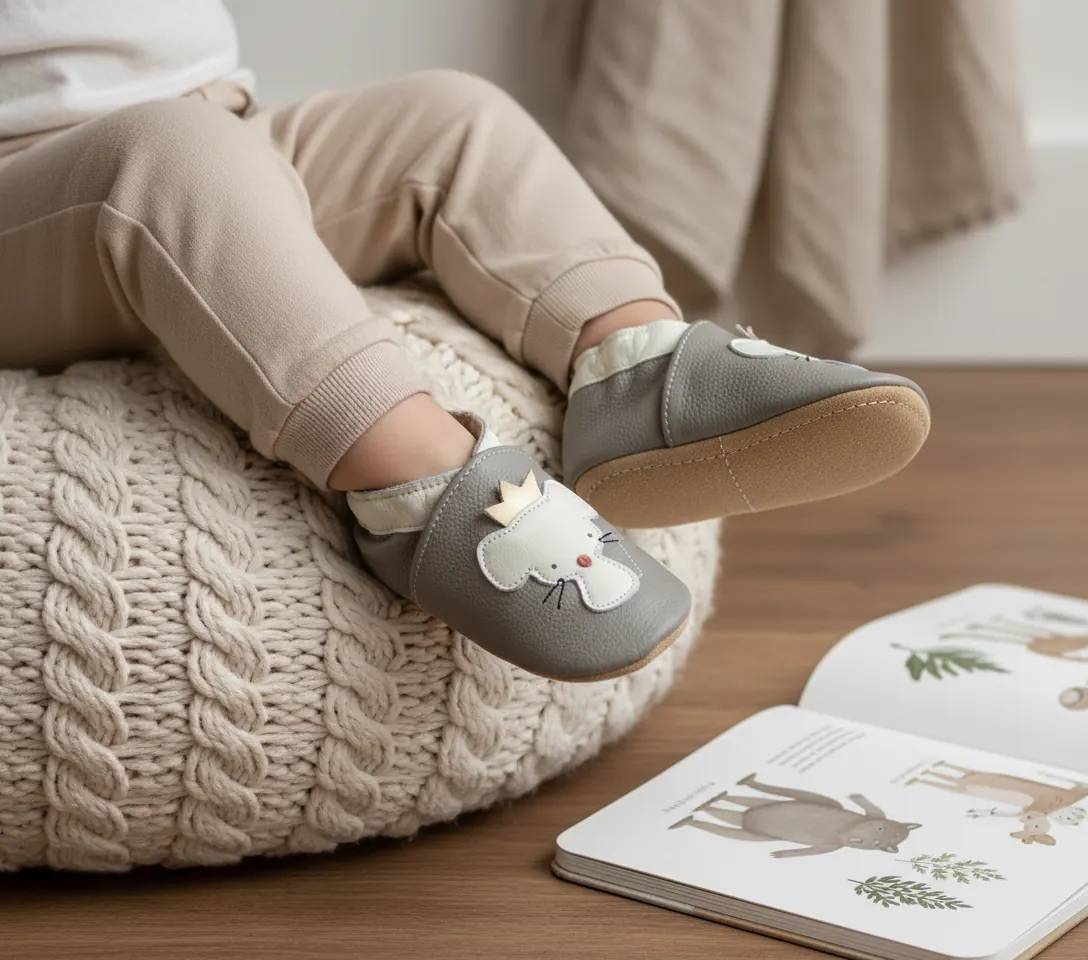
Does that mean slippers are useless before age one? Not quite. A soft slipper covers the foot when the house is cool, when you lift baby out of bed, or when they're passed from arms to arms during a visit. With elastic around the ankle, it stays in place. And it's often one of the very first gifts a new baby receives.
It's an object of comfort and tenderness, not a development tool. The rule to keep in mind: a first slipper shouldn't get in the way of anything. The foot should be able to move, bend and stretch, just like barefoot.
At what age should you buy first slippers?
There's no set age. But there are three moments when a pair comes in handy.
At birth
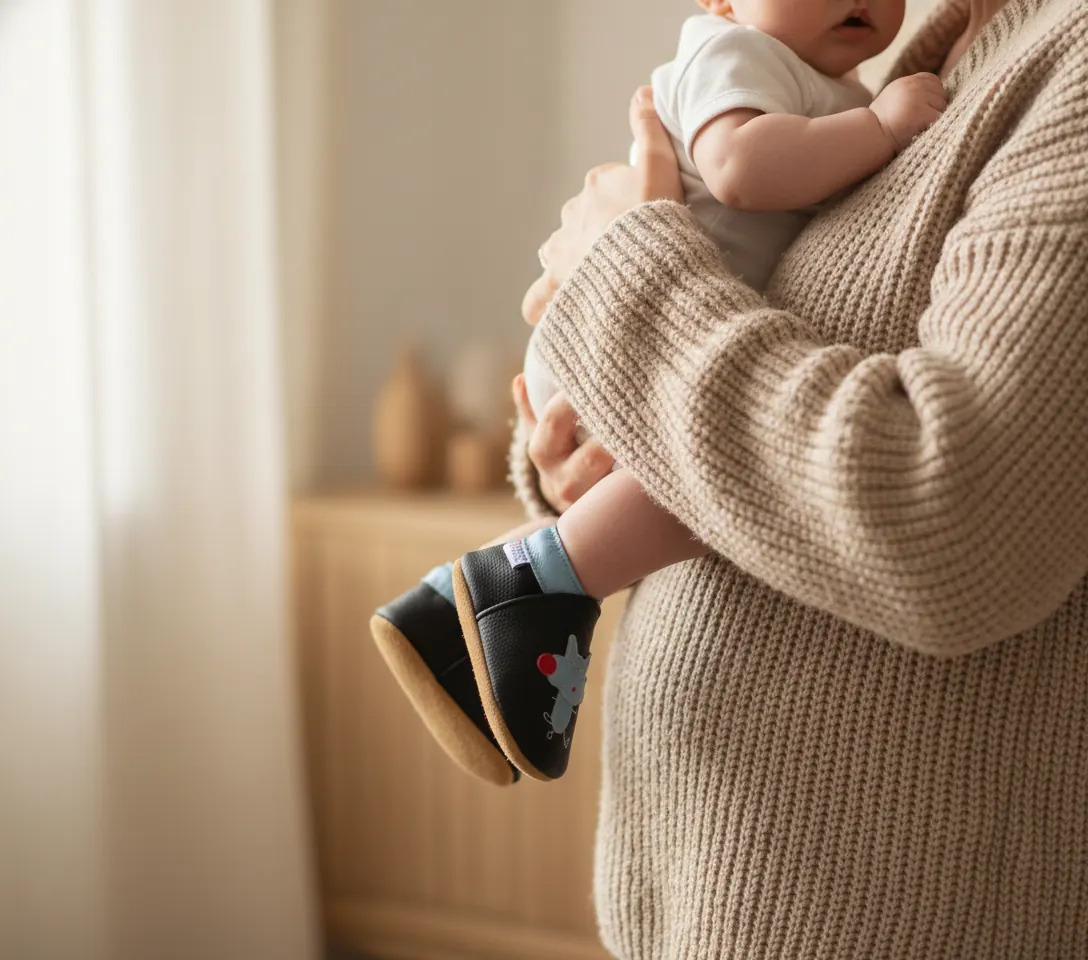
Our smallest slippers, in size 16-17 (EU), are designed for 0 to 6 months. That's the size to choose for a newborn. At this age, the slipper is mainly there to cover the foot and keep it cozy, at home or in the stroller.
When baby gets moving or stands up
Toward the end of the first year, baby rolls, crawls, gets around on all fours or pulls up on the sofa. Barefoot is still a great option at home. A soft slipper can take over on a smooth or cold floor, as long as it doesn't restrict any movement.
At the first steps
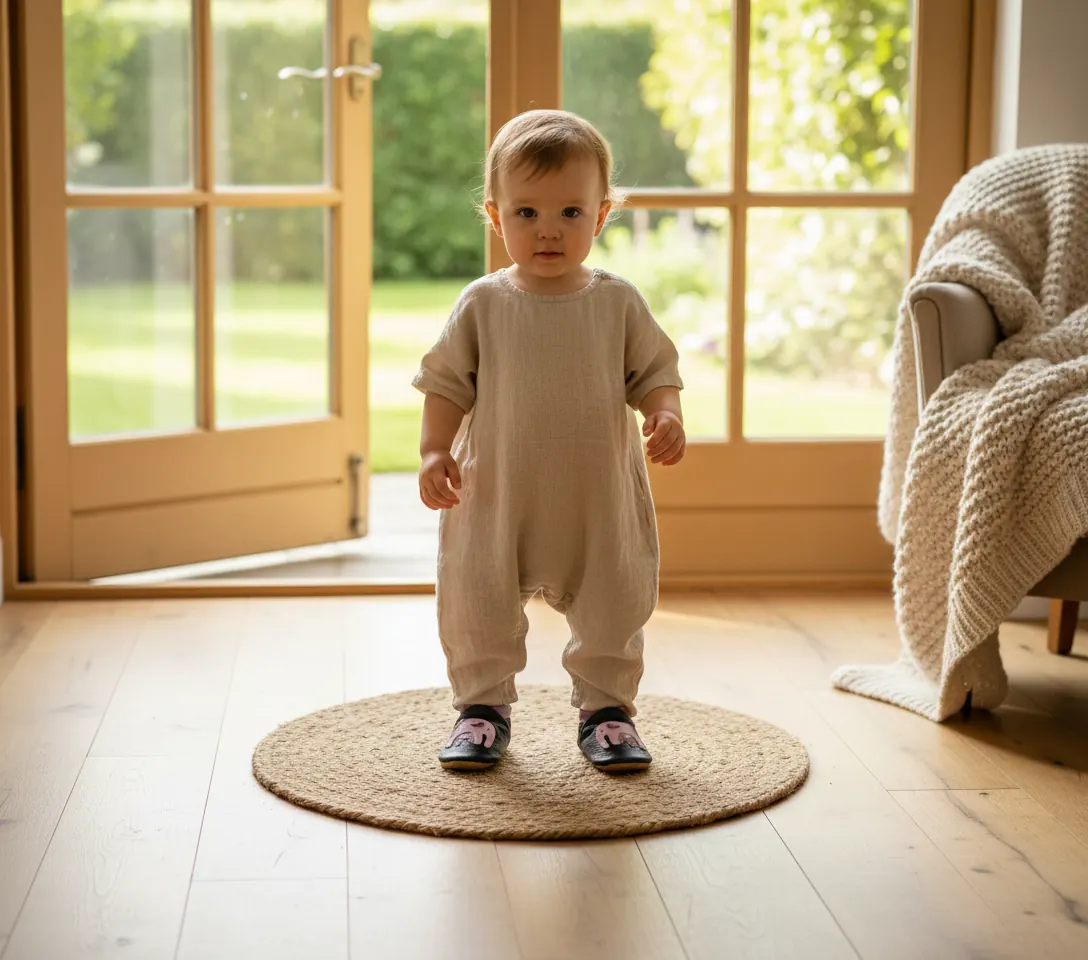
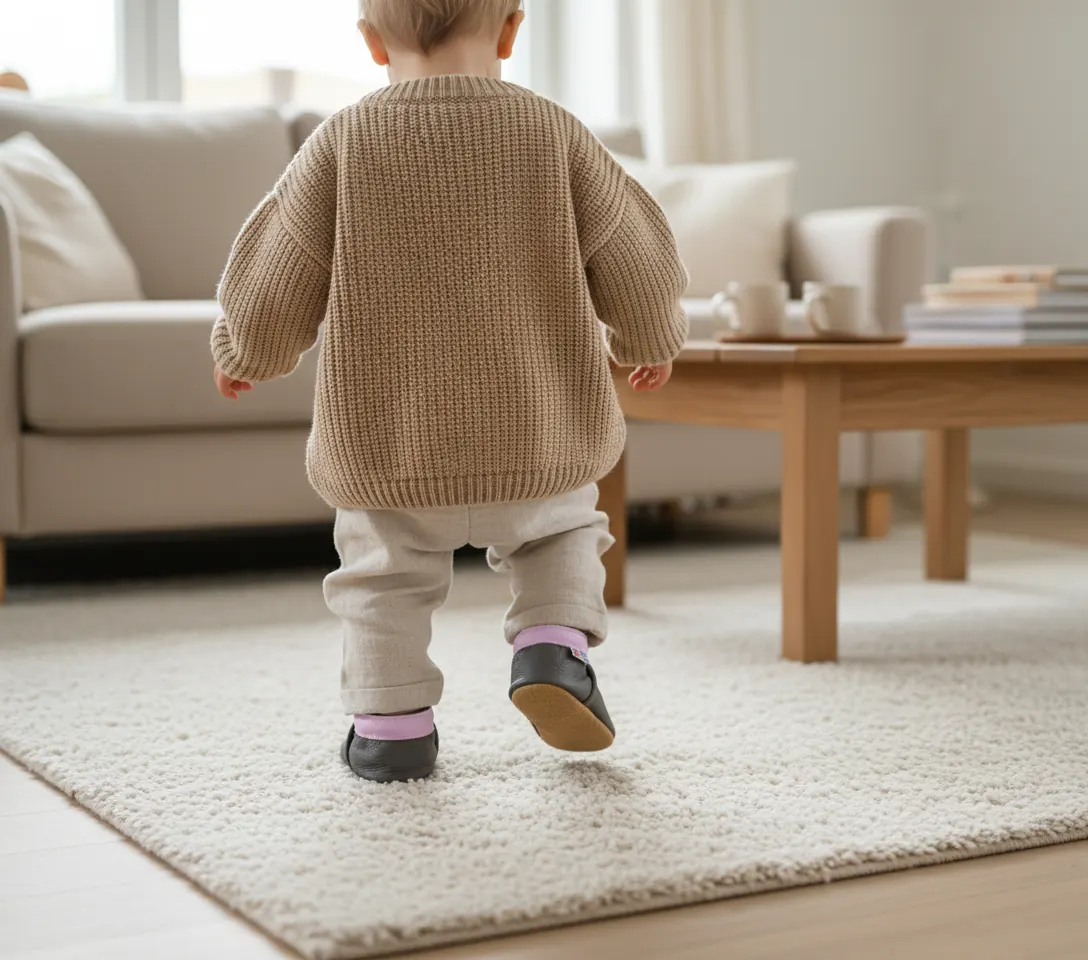
When your child starts walking, the CPS says their shoes should protect their feet and give some grip on smooth surfaces. At home, a slipper with a soft, non-slip sole fits that description. Outdoors is another story: we'll come back to that below.
Why a soft slipper rather than a stiff shoe?
The idea that shoes are needed for muscles and bones to develop comes up often. The CPS answers it directly: left alone, a child's feet develop well.
The American Academy of Pediatrics (AAP) agrees: babies' feet develop best if they're not confined in shoes
. For first shoes, it describes a flexible, closed, non-slip design. It notes that arch supports, wedges and heel reinforcements have no proven benefit, and that they may actually make it harder to walk
.
That's why a good first slipper is like a second skin: like barefoot, but protected. To learn more, read our article Barefoot or slippers for learning to walk?
How to choose a first pair
A few simple criteria are all you need. Hold the slipper in your hand before buying, or read its description carefully.
- Flexibility. The slipper should bend easily, from toe to heel. A stiff sole has no place in a first pair.
- No arch support, no reinforcement. A flat, thin sole lets the foot move freely.
- A non-slip sole. On smooth floors, that's what provides grip.
- A secure fit. Elastic around the ankle helps the slipper stay on, even when baby wiggles.
- A breathable material. Soft, breathable leather moulds to the shape of the foot.
- The right size. Not too snug, not much too big. If you're torn between two sizes, go with the larger one: the foot keeps a little room to grow.
Check the colours and standards too. Petit Canon slippers, for example, use water-based colours, free of chemicals, and meet NF safety standards.
How long does a size last?
Little feet grow fast, especially at first. In our chart, the size changes every six months until age two, then every year until age six:
- 16-17 from 0 to 6 months, 18-19 from 6 to 12 months, 20-21 from 12 to 18 months, 22-23 from 18 to 24 months;
- then 24-25-26 from 2 to 3 years, 27-28 from 3 to 4 years, 29-30 from 4 to 5 years and 31-32 from 5 to 6 years.
These ranges are guidelines: every child grows at their own pace. Remember to check their foot length from time to time. Our article What size for baby? explains how to measure it at home, and the size guide gives you the matching size.
What about going outside?
A soft leather slipper with a suede sole is designed for indoors: at home, at daycare, on visits to the grandparents.
The AAP points out that once children start walking outdoors, they need shoes for protection
: comfortable shoes with nonskid soles
. For the sidewalk, the park or the snow, plan on outdoor shoes, and keep the slippers for home.
Key takeaways
- Before walking, slippers aren't necessary: they're there for comfort.
- Choose soft, with no arch support or reinforcement, and a non-slip sole.
- Between two sizes, go with the larger one.
- If your child has pain when walking, talk to their doctor.
Petit Canon first slippers
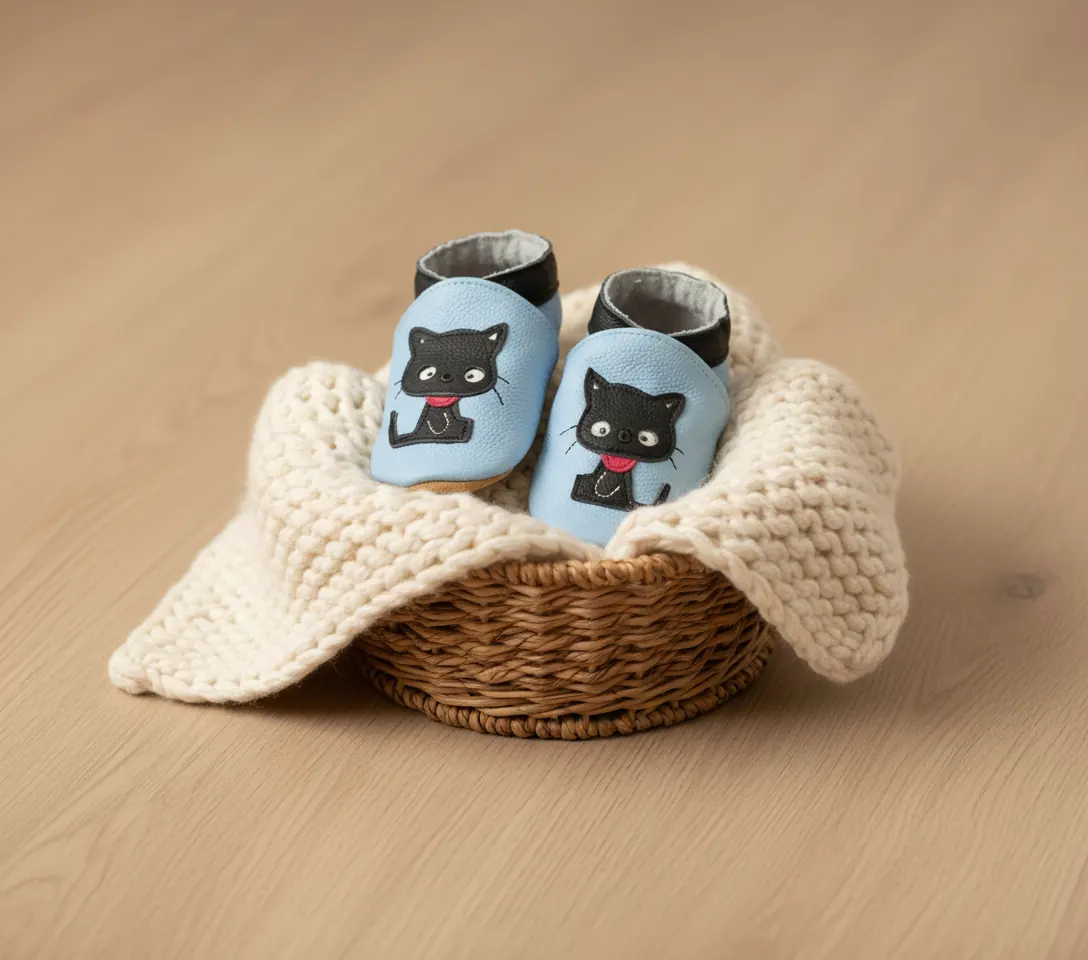
Our slippers are handmade from 100% natural cowhide leather, soft and breathable, with a non-slip suede sole and elastic around the ankle. Each model has a first name and an original illustration, like Timothe and its winged star, and every pair comes in a cotton pouch.
They come in sizes 16-17 (0 to 6 months) to 31-32 (5 to 6 years). Fringed Petit Moccs, in solid colours, go from 16-17 to 22-23 (18 to 24 months).
Sources
- Canadian Paediatric Society, Community Paediatrics Committee, Footwear for children, updated July 2022: caringforkids.cps.ca
- American Academy of Pediatrics, Shoes for Active Toddlers, HealthyChildren.org: healthychildren.org
- American Academy of Pediatrics, Movement Milestones in Babies 8 to 12 Months Old, HealthyChildren.org: healthychildren.org
A guideline, not medical advice: none of these sources mention Petit Canon specifically. If your child has pain when walking, talk to their doctor.