Advice · Learning to walk
Barefoot or soft slippers for learning to walk?
Should baby go barefoot for their first steps, or wear slippers? Pediatric societies and research give a fairly reassuring answer: above all, the foot needs freedom. Here's an overview, with sources to back it up.
The short answer
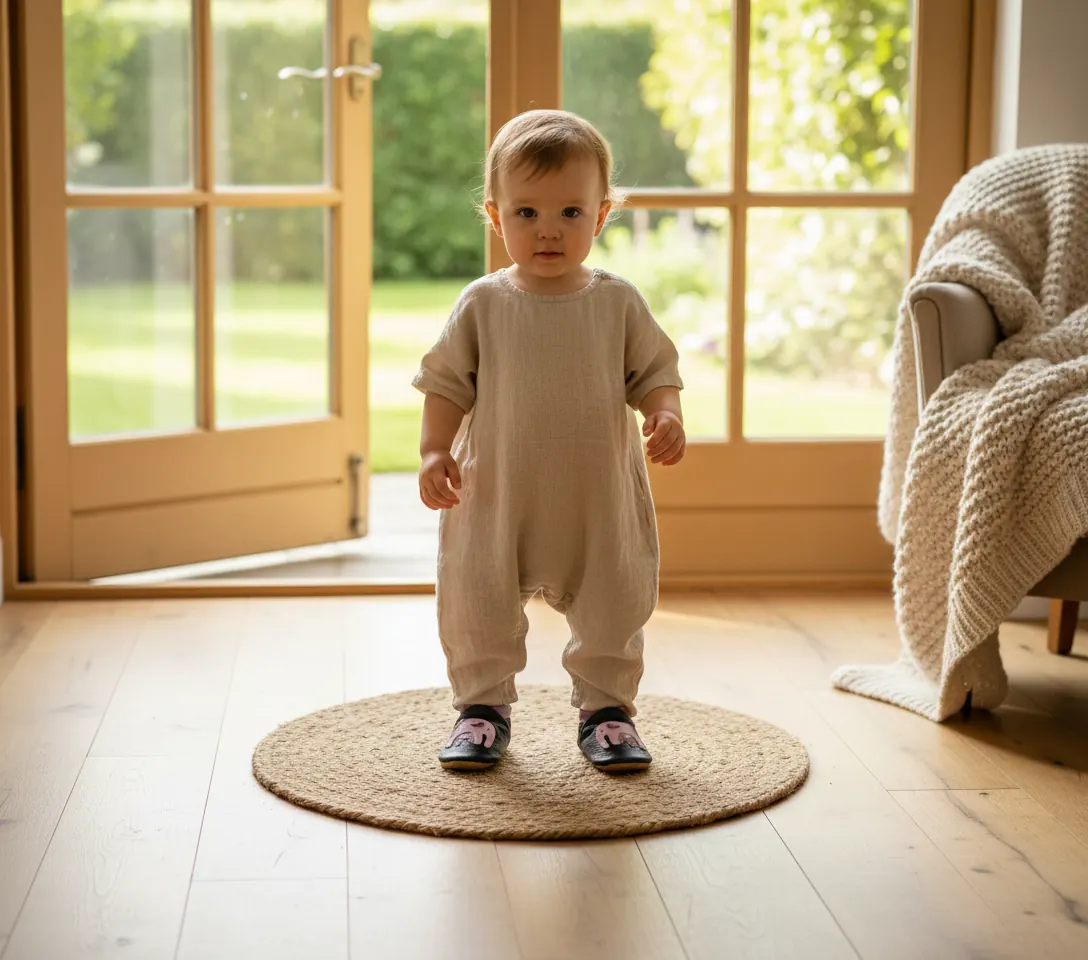
At home, on a safe floor, barefoot is just fine. When the foot needs protection, or grip on a smooth floor, a very soft slipper with no arch support or reinforcement is the closest thing to it. Outdoors, real shoes are a must.
The rest of this article explains where these guidelines come from. We cite our sources, and we stick to what they say.
What the Canadian Paediatric Society says
In its handout Footwear for children, updated in July 2022, the Canadian Paediatric Society (CPS) starts from a simple point: if your child isn't walking yet, they don't need to wear shoes.
To those who believe shoes are needed for muscles and bones to develop, it replies that a child's feet will develop well if they're left alone.
Once a child is walking, the CPS says shoes have two jobs: protecting the feet, and giving some grip on smooth surfaces. Finally, it advises seeing a doctor if the child has pain when walking.
What the American Academy of Pediatrics says
On HealthyChildren.org, its website for parents, the American Academy of Pediatrics (AAP) writes that babies' feet develop best if they're not confined in shoes
. On the other hand, once children start walking outdoors, they need shoes for protection
: comfortable shoes with nonskid soles
.
In its page on motor development between 8 and 12 months, the AAP describes first shoes: flexible, closed and non-slip. It also warns against arch supports, wedges and heel reinforcements. According to the AAP, they have no proven benefit and may actually make it harder to walk
.
What a study on first steps measured
In 2014, a team of researchers (Buckland et al.) published a study in the journal Pediatric Physical Therapy involving 25 children who had been walking for five months or less. It compared how they walked barefoot and in shoes of varying flexibility. Its findings:
- the time the foot spent on the ground (stance time) was shorter barefoot than in shoes;
- it was also shorter in very flexible shoes than in less flexible ones;
- the number of falls was the same, whatever the shoe.
On this specific measure, the more flexible the shoe, the closer walking gets to walking barefoot. And a stiffer shoe didn't reduce the number of falls.
Let's keep this in perspective: it's a small study, of 25 children, and it didn't involve our slippers. It doesn't say that a slipper helps a child walk sooner or better. It simply supports what pediatric societies say: for first steps, flexibility matters.
Barefoot at home: when it's possible
If the floor is clean, with nothing lying around, and the room is warm enough, letting baby go barefoot is a simple option. They can feel the floor under their feet, and you don't have to buy anything.
Keep an eye on surfaces: cold tile, very smooth floors, stairs, small forgotten toys. That's where some protection becomes useful.
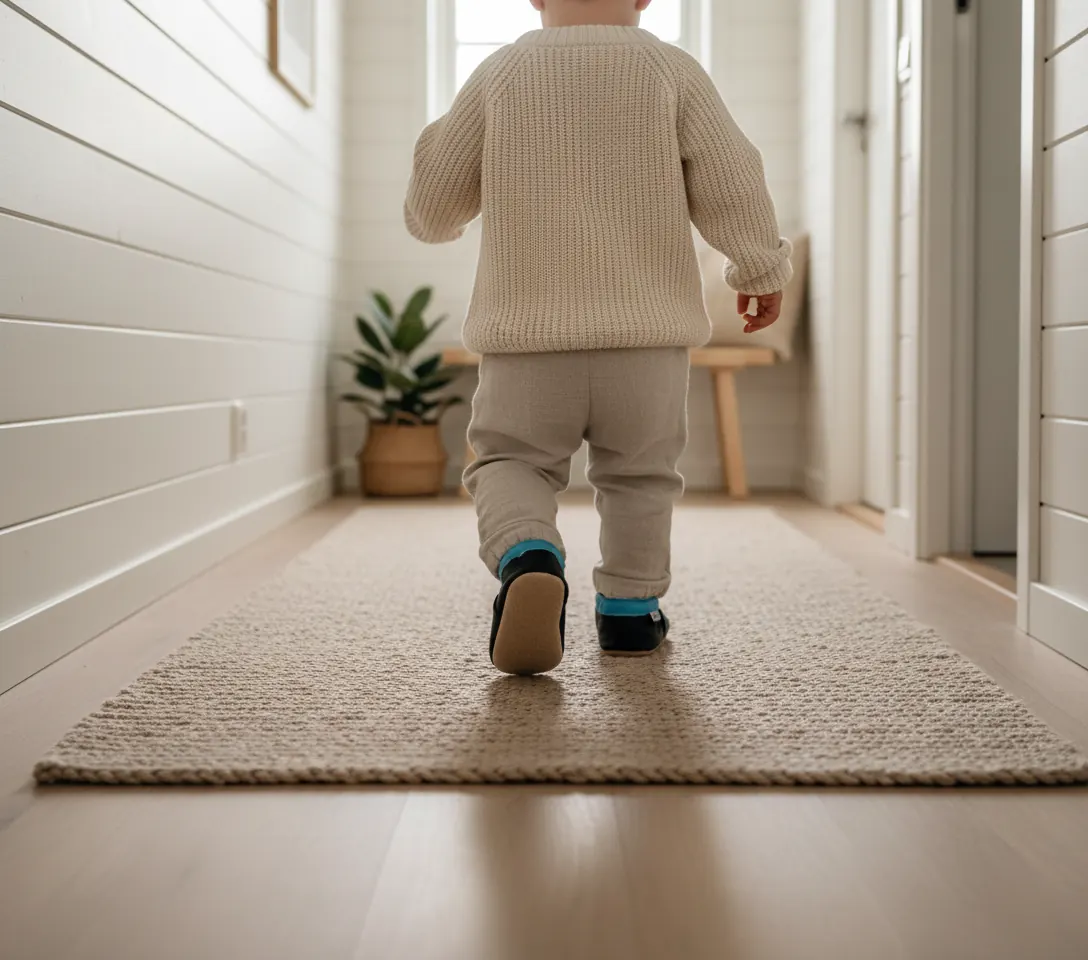
When a soft slipper takes over
A soft slipper is useful when the foot needs to be covered without being confined: a cool house, a smooth floor, daycare, a visit to family or friends. To do this job well, it should tick the boxes described by pediatric societies:
- flexible, from toe to heel;
- no arch support, no wedge, no heel reinforcement;
- a non-slip sole;
- a secure fit, so it doesn't slip off the foot.
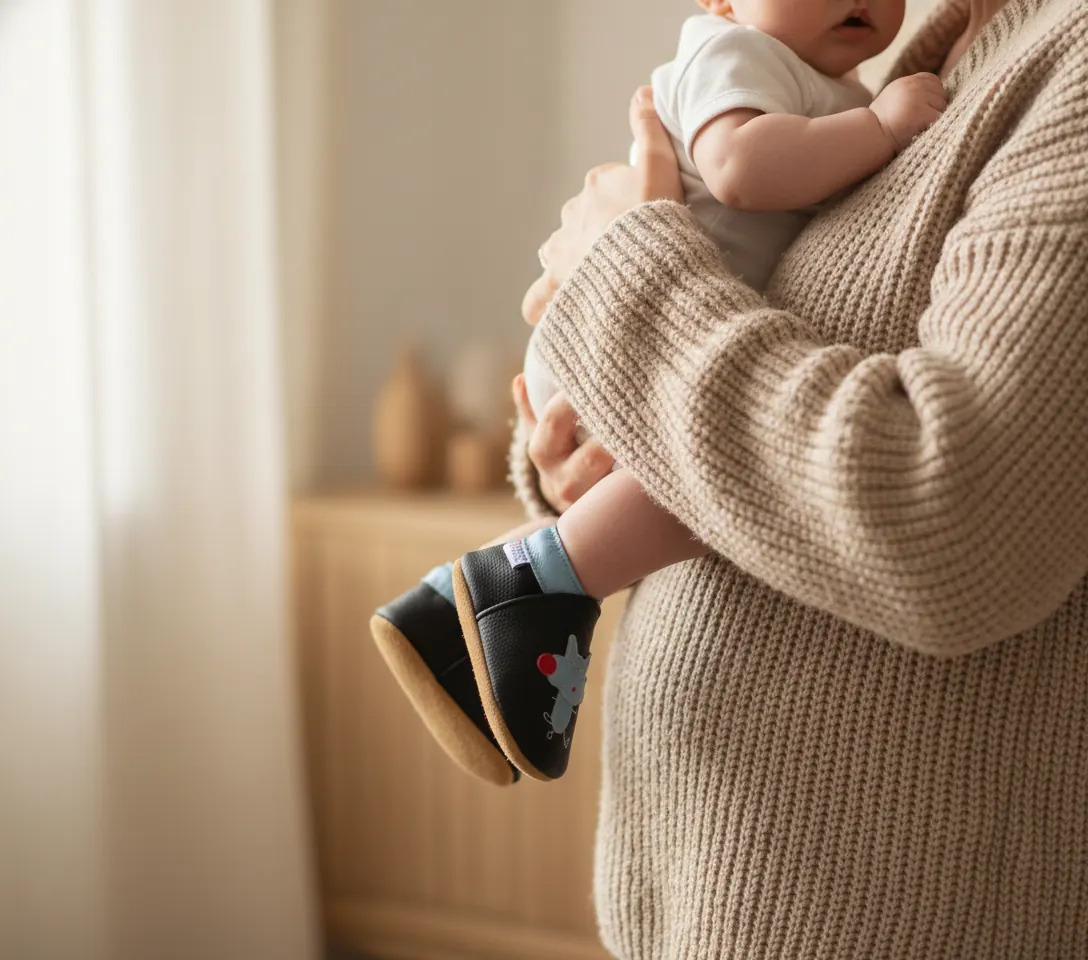
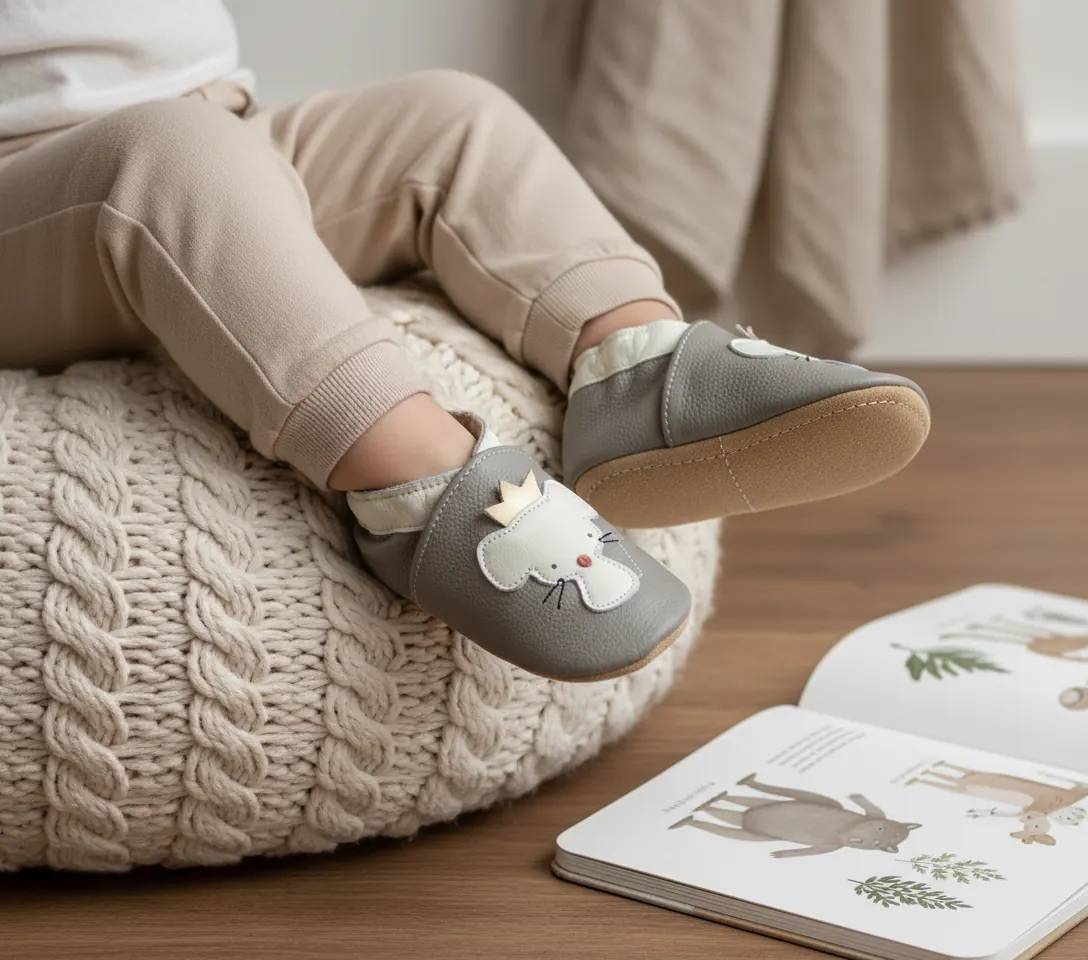
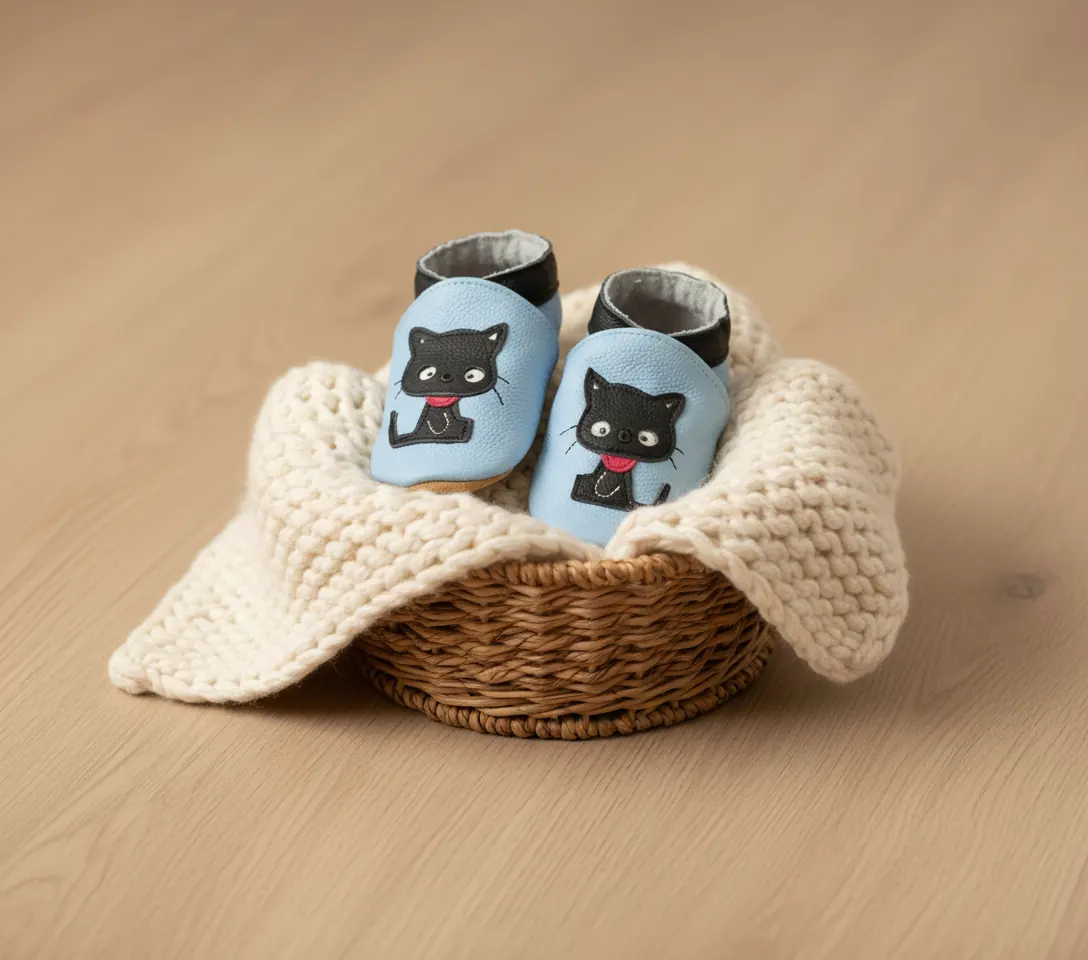
That's the idea behind our slippers: soft cowhide leather that moulds to the shape of the foot, a non-slip suede sole, elastic around the ankle for a secure fit, and no stiff sole. Like barefoot, but protected.
What's best avoided
- Thick or stiff soles for the very first steps at home.
- Arch supports, wedges and heel reinforcements: no proven benefit, according to the AAP.
- Shoes that are too small. If you're torn between two sizes, go with the larger one; our article on baby shoe size explains how to measure the foot.
- Slippers that twist or slip off the foot: elastic should hold them in place.
When to talk to the doctor
This article offers guidelines, not medical advice. The CPS advises seeing a doctor if your child has pain when walking. For any concern about the way they walk or the shape of their feet, talk to their doctor.
Frequently asked questions
Do soft slippers help babies walk sooner?
Nothing shows that they do, and we don't claim it. The sources cited here say something else: the foot develops well when it's left alone, and if it needs protection, a flexible shoe with no arch support or reinforcement is best.
Does a baby need to wear shoes before walking?
No. According to the Canadian Paediatric Society, a child who isn't walking yet doesn't need shoes. Slippers can simply keep their feet covered.
Can soft leather slippers be worn outside?
They're designed for indoors. For walking outdoors, the American Academy of Pediatrics advises shoes that protect the foot: comfortable, with non-slip soles.
Sources
- Canadian Paediatric Society, Community Paediatrics Committee, Footwear for children, updated July 2022: caringforkids.cps.ca
- American Academy of Pediatrics, Shoes for Active Toddlers, HealthyChildren.org: healthychildren.org
- American Academy of Pediatrics, Movement Milestones in Babies 8 to 12 Months Old, HealthyChildren.org: healthychildren.org
- Buckland et al., Pediatric Physical Therapy, 2014, 26(4): 411-417 (abstract): pubmed.ncbi.nlm.nih.gov
None of these sources mention Petit Canon or recommend any brand. If your child has pain when walking, talk to their doctor.